The 1685 French Code Noir is most often remembered as a brutal assertion of territorial rights, played out in part with horrifying inhumanity towards people of African descent living under French colonial rule. This route considers another group who was affected by the provisions of the Code Noir: Jews, whose only mention was in the first article of the Code, summarily expelling them from French territory. Passing by various sites from the colonial and post-colonial years in New Orleans, when Louisiana Territory changed hands between the French, the Spanish, and the United States, this ride also moves though sites that were important in the early- and mid-twentieth century history of Jewish life in New Orleans.
[su_spoiler title=” Click here to see suggested turn-by-turn directions and stop info for this 10 mile route. ” open=”no” style=”default” icon=”plus” anchor=”” class=””]
Turn by turn directions can be found here: https://goo.gl/maps/TgUmDUdcZedCDmCs7
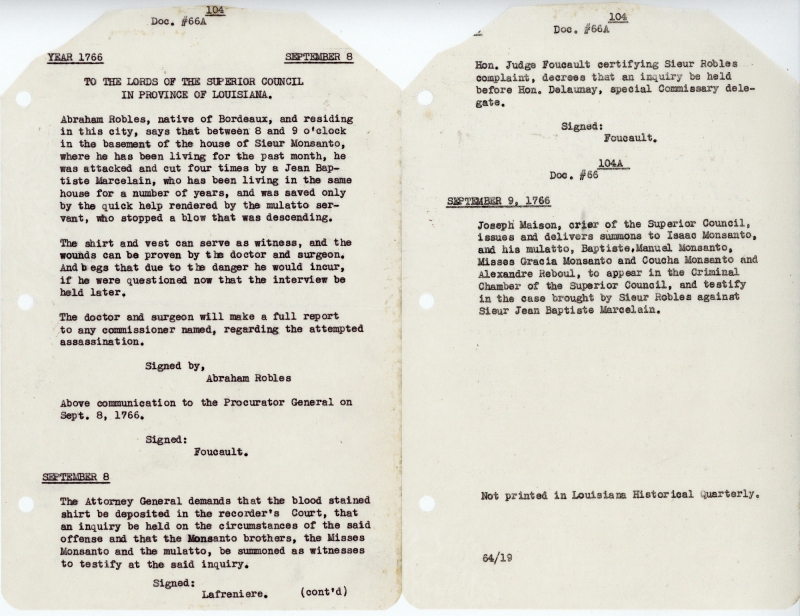
Stop 1: Isaac Monsanto’s house on the 200 block of Chartres Street[su_expand height = “50”]Isaac Rodríguez Monsanto and his family were the first (known) Jews to settle in the European territory of Louisiana, with Isaac arriving in 1757 and followed quickly by his six siblings. The Monsanto family were Sephardic Jews originally from the Iberian Peninsula, who had moved to Amsterdam and become successful merchants. Issac Monsanto was born in The Hague, Netherlands, but moved first to Dutch Curaçao before coming to New Orleans. In the city, he and some of his siblings first lived in a house in this section of Chartres Street.
As a merchant, Isaac Monsanto traded in various goods, but most pointedly he sold enslaved human beings, building a fortune based in part on human misery. Monsanto and his family lived openly as Jews in the city despite the explicit provision of the 1685 Code Noir prohibiting Jews from living in French territories. In 1768, Monsanto purchased a plantation known as “Trianon” at the site of what is now the Algiers Point Courthouse, where the Monsantos kept enslaved people in bondage to work for their own family. After the Spanish took over Louisiana in 1769, they replaced the Code Noir laws with their own, more rigidly enforced legal rules, and Jews were expelled from Louisiana. Small numbers of Jews managed to stay in the city (sometimes by pretending to convert to Roman Catholicism), and other Jewish families returned with the resumption of French rule in 1800 or, in greater numbers, after the Louisiana Territory was purchased by the United States in 1803.
Isaac Monsanto himself never returned to New Orleans, and instead died in 1778 in Pointe Coupée, where his brother Benjamín had purchased a plantation and was attempting to establish himself as a planter. Benjamín and Angélica Monsanto both moved back to New Orleans, where Angélica owned several properties in the French Quarter, two of them in the 800 block of Chartres. Descendants of Isaac Monsanto also founded the company that became the hugely problematic and predatory multinational chemical corporation that still carries the family last name.
[/su_expand]
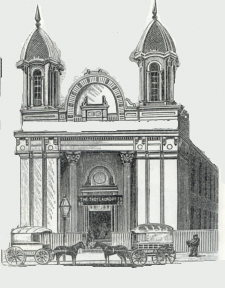
Stop 2: Congregation Shangarai Chasset/Shaarei Chesed (Gates of Mercy)[su_expand height = “50”]The first formal synagogue in New Orleans, built in 1827, after Jews returned to New Orleans and the Louisiana Territory. This congregation was composed of both Sephardim (Ladino-speaking Jews who are often from Spain, Portugal, and the Netherlands) and a smaller number of Ashkenazim (Yiddish-speaking Jews largely from Eastern Europe). The congregation initially met in a blacksmith’s shop, but by the early 1900s Shaarei Chesed built the synagogue that still stands on Rampart Street. The former synagogue is now home to a Catholic Church, Our Lady of Guadalupe Church & International Shrine of St. Jude. In 1828, Shaarei Chesed also established a cemetery at Jackson Avenue and Saratoga Street, but that cemetery was demolished in 1957 in order to build the playground now at that location.
[Sephardim and Ashkenazim are by no means the only ethnicities within Judaism, which also includes such significant populations as Arabic-speaking Jews (sometimes called Mizrahim, although that name is not always welcomed and in particular there are tensions regarding the treatment of Arabic-speaking, Middle Eastern Jews in Israel), Farsi-speaking Persian Jews from Iran, Maghrebi Jews from Northern Africa, Beta Israel in Ethiopia and Israel (where they too sometimes face severe discrimination), and other communities around the world (such as the Jewish community of Kaifeng, Henan Province, China). Do you know about history involving these communities or others in New Orleans? Please leave a comment below!]
[/su_expand]
Stop 3: Congregation Nefutzoth Yehudah (Dispersed of Judah)[su_expand height = “50”]As the number of German Ashkenazi Jews ticked upwards in the city, there were tensions between Ashkenazi and Sephardic members of Shaarei Chesed (among other reasons, including disagreements about the acceptability of marriage to non-Jews and the degree of integration of each population with the larger city of New Orleans. Broadly speaking, Sephardim tended to be more secular and open to mixing with or marrying non-Jews, while Ashkenazim were more culturally separatist and far less tolerant of such marriages). In 1846, some of the Sephardim in the congregation broke away from Shaarei Chesed and formed a new congregation that hewed more closely to their traditions The new Congregation Nefutzoth Yehudah moved into a building purchased for them by prominent businessman Judah Touro, the Christ Church that formerly stood at the corner of Bourbon and Canal. The church/synagogue is gone now, although it would have stood in the footprint of the site that is now the Crowne Plaza hotel). Emily Ford has a picture of the former synagogue on her “Oak and Laurel” cemetery preservation blog, along with pictures from the Canal Street cemetery that Nefutzoth Yehudah also started in 1846:
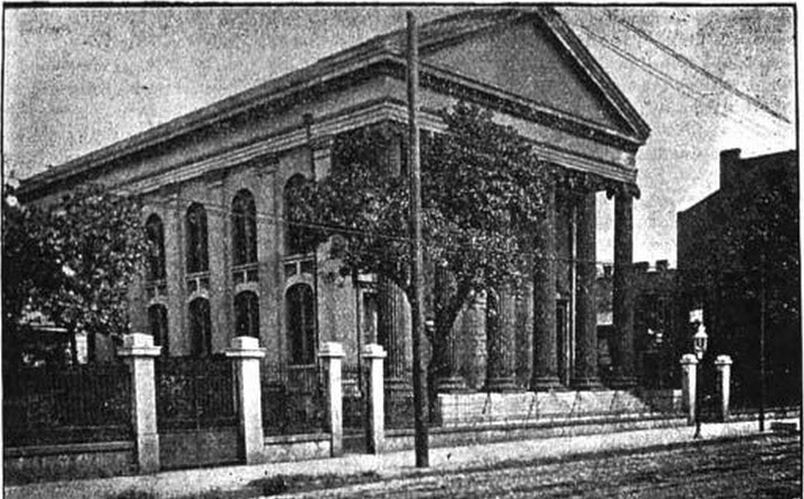
In 1881 – in part because of personal and financial stress on the Jewish community and the broader city brought on by the 1878 Yellow Fever epidemic – Shaarei Chesed and Nefutzoth Yehudah merged again to become Touro Synagogue, and in 1908 moved to a new building at Napoleon and St. Charles Avenue (you’ll pass the new building between Lafayette Cemetery and Temple Sinai, stops seven and eight below). [/su_expand]
Stop 4: Karnofsky Tailor Shop[su_expand height = “50”]This is the former home and tailor shop of the Karnofsky family, Lithuanian Jewish immigrants to New Orleans. Look at the tiles in the right-hand door and you can still see “The Model Tailor,” the only clue to the importance of this building. The Karnofskys were not well-off, but they were members of the thriving Jewish community developing in this part of the city (see the next stop on Dryades Street for more on that). In addition to Louis Karnofsky’s tailoring business, the Karnofsky family had a few other sidelines as well: during the day, Morris and Alex (or Aleck) Karnofsky, two of the family’s five sons, would drive a refuse wagon around the neighborhood to collect trash that the family might be able to re-sell, such as bottles and rags. They also made nightly rounds in the Storyville red light district on the other side of Canal Street, selling buckets of coal to sex workers standing in the doorways of brothels. (It’s worth noting that some editions of the Blue Books – the directories of sex workers in Storyville – listed “Jewish” woman alongside “white,” “colored,” “octoroon,” and other ambiguous “racial” designations designed to appeal to the primarily richer, mostly tourist, exclusively white male customers).
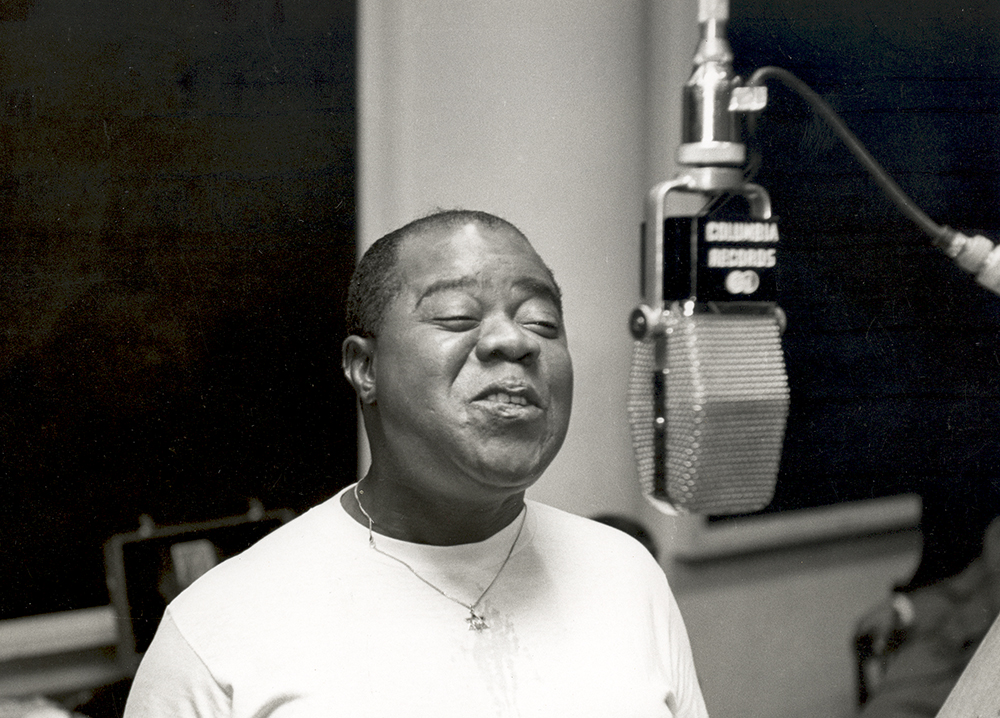
The Karnofskys are much more famous, though, for their association with a young boy who worked with Morris and Alex on the refuse wagon, blowing a tin horn to attract customers: Louis Armstrong. Armstrong was born in a house in Jane Alley, but early in his life, he, his mother Mary Ann (or Mayann) Albert, and his sister Lucy moved to the Third Ward near the Karnofskys’ shop. Louis Karnosfky hired Armstrong as a helper (Armstrong later claimed to have been six or seven when he worked with Morris and Alex, and although there are reasons to doubt he was that young it is unquestionable that he was still very much a child at the time). While riding on the wagon, Armstrong saw a cornet in a pawn shop window, but didn’t have the five dollars the store was asking for the instrument. Morris gave him some of the money, Armstrong saved the rest, and that became his first horn. (Some sources claim Morris bought the cornet outright for Armstrong in exchange for a promise that Armstrong would continue working on the wagon for another year). The Karnofsky family also took Armstrong into their home to share meals with him between long shifts on the wagon, and Armstrong heard the family singing Jewish songs, including one that Esther “Tillie” Karnofsky (Morris and Alex’s mother, and Louis Karnofsky’s wife) apparently loved and sang often, “Russian Lullaby.”
In 1913, Armstrong was arrested on New Year’s Day for shooting six blanks from his step-father Tom’s gun, and a judge summarily sent him to the Colored Waif’s Home for Boys for a cruelly open-ended sentence. At the Home, Armstrong took music lessons with teacher Peter Davis, and became a star of the Home’s band. After a year-and-a-half, Armstrong was released from the Home, and continued to play music, eventually landing in Fate Marable’s band and playing on steamboats in the city. In 1922, and at Joseph “King” Oliver’s invitation, Armstrong left New Orleans for Chicago to join Oliver’s Creole Jazz Band.
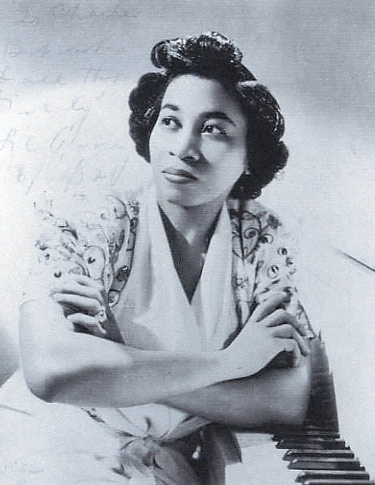
In Oliver’s band, Armstrong played with the extremely talented pianist Lillian “Lil” Hardin, and the two began a relationship (complicated by the fact that they were both already married but not living with their respective spouses). After obtaining divorces, Armstrong and Hardin married in 1924, and Hardin quickly pushed Armstrong to pursue his musicianship more seriously and to take a leading role with a band of his own. Largely due to Hardin’s encouragement and keen business sense, Armstrong’s career exploded, and he was soon among the most famous musicians in the world. Their marriage, however, did less well, and they separated in 1931 and finally divorced in 1938. (Hardin is worth reading about in her own right too, especially as a pioneering jazz musician who broke gender barriers and won renown for her incredible talent).
Armstrong spent decades touring the United States and the world, becoming arguably one of the most recognizable musicians in history, and unquestionably an absolutely foundational figure in jazz. In 1958, after nearly three decades of national and international fame, Armstrong suffered a massive heart attack following a whirlwind tour through Scandinavia, continental Europe, Israel, Lebanon, and Egypt. From then on, he battled an escalating series of health crises, until his body began to fail and he was hospitalized in New York at Beth Israel under the care of Dr. Gary Zucker. At some point when they were together, Dr. Zucker began to sing a melody that Armstrong knew well: “Russian Lullaby.”
Lying in his hospital bed in 1969, perhaps stirred by the memories of Tillie Karnofsky singing the same melody, Armstrong began a handwritten autobiography that he called “Louis Armstrong + the Jewish Family in New Orleans, La. The Year of 1907.” In the memoir, completed in 1970, Armstrong writes of his fond memories of the Karnofsky family, his love of their music and ritual, and his respect for the ways in which Jews stood together against the systemic oppression and prejudice they faced in New Orleans. Armstrong’s memoir is a strange, deeply contradictory document, at times frankly acknowledging the nightmarish racial terror that Black people faced in the United States, and at other times excoriating them for failing to advance in the way that he saw Jews managing to do. Armstrong is also forthright about the effects of race on musicians’ ability to make a living (suggesting, for instance, that Jelly Roll Morton was able to get more work than other Black musicians due to his light skin), but returns again and again to fond remembrances of the Karnofskys. Despite Armstrong’s experience, there is a history of mutual distrust between Black and Jewish communities that should be frankly acknowledged. Some have suggested that Armstrong may have written the document because of an uptick in Black-Jewish tension in the 1960s (such as the rhetoric of the Nation of Islam). And the memoir often reserves its harshest tone for Armstrong’s father William for abandoning Mary Ann. It’s unclear what his motivations were for writing it, and ultimately the memoir was not published during Armstrong’s lifetime. For a (much) longer examination, read Dalton Anthony Jones’ essay, “Louis Armstrong’s ‘Karnofsky Document’: The Reaffirmation of Social Death and the Afterlife of Emotional Labor.”
Morris Karnofsky (who shortened his last name to Karno for at least part of his life) has another place in jazz history as well. Morris was the proprietor of a record shop called Morris Music Co., located in the early 1930s at 203-205 S Rampart, and then in the late 1930s at 168 S. Rampart (both buildings are long gone). Morris Music was probably the first record shop in the city to sell jazz music, and Morris Karno eventually expanded to sell instruments, including to school band programs. Morris and Armstrong apparently also kept in touch before Morris died in 1944, with Armstrong coming to visit whenever he was in New Orleans. And Armstrong kept a final memento of his relationship with the Karnofsky family and other Jewish friends quite literally close to his heart: for most of his adult life he wore a Star of David necklace, per his words rarely (if ever) taking it off.
2021 Update: the Karnofsky Tailor Shop was once of many building in Louisiana to collapse during Hurricane Ida. Also destroyed was Brandan “BMike” Odum’s Buddy Bolden mural on the neighboring Little Gem Saloon, with only the very top of the mural remaining. However, the “The Model Tailor” tiles are still visible on the ground in front of where the building once stood.
[/su_expand]
Stop 5: O.C. Haley/Dryades Street Commercial District[su_expand height = “50”]In the late 18th and early 19th centuries, as the population of Eastern European Jews in New Orleans expanded, many moved to or opened business in the vibrant commercial district of Black New Orleans centered on Dryades Street. By the 1930s, Dryades Street rivaled the shops on Canal Street, but whereas Canal street was strictly segregated and largely open only to white shoppers, Dryades Street was a mixed neighborhood where Black, Jewish, Italian, and German New Orleanians lived and worked together and patronized one another’s businesses (although not without tension, and with Black employees at non-Black-owned businesses usually relegated to relatively menial jobs). The 1700 block of Dryades, for instance, was anchored in part by Kaufman’s Department Store where the Ashé Cultural Arts Center is now housed.
In the 1980s, New Orleans renamed a section of Dryades for Oretha Castle Haley, a Civil Rights organizer and a president of the New Orleans chapter of the Congress of Racial Equality (CORE). As a college student, Haley joined the 1960 boycott of businesses on Dryades Street that wouldn’t hire Black sales clerks or cashiers, despite the fact that the majority of customers in the area were Black.

Some stores chose to desegregate their work forces and hire Black New Orleanians at all levels. Others, however, chose to close and move to the much whiter suburbs.
[/su_expand]
Stop 6: Congregation Shaarei Tefiloh (Gates of Prayer)[su_expand height = “50”]This shul (meaning temple or school in Yiddish) was established by the Jewish residents of Lafayette City – later incorporated into New Orleans as the Garden District – after the foundation of a merchants association, the Jewish Benevolent Society of Lafayette in 1849. Although Congregation Shaarei Tefiloh was founded in 1850, this particular building was not constructed until after the Civil War, and was formally consecrated in April of 1867. Like Shaarei Chesed and Nefutzoth Yehudah before it, Shaarei Tefiloh was also a traCditional Orthodox synagogue, and so for instance held services that were strictly divided by gender (women were restricted to a balcony above the main sanctuary space). However, the influence of the 1845 formal establishment of Reform Judaism would soon be felt in New Orleans. [Please note: this video is very much from the perspective of Reform Judaism, and is intended only as a primer on the basic history of modern Reform Judaism].
In 1975, Shaarei Tefiloh moved to a new building in Metairie, where the congregation is still based. The building on Jackson Avenue fell into disrepair and was eventually purchased in 2012 and converted into condos. Although it is no longer a synagogue the Jackson Avenue shul is still one of the oldest existing synagogue buildings in the United States.

[/su_expand]
Stop 7: Lafayette Cemetery No. 1[su_expand height = “50”]With all credit to Emily Ford and her Oak and Laurel blog, read about the near anonymous Jewish stonecutter H. Lowenstein, whose carvings still grace graves in this cemetery, and the much more prosperous businessman and stonecutter Edwin I. Kursheedt: http://www.oakandlaurel.com/blog/the-legacy-of-jewish-stonecutters-in-new-orleans-h-lowenstein-and-edwin-i-kursheedt
Or you can listen to Emily herself in this video!
(Unfortunately, Lafayette No. 1 is currently closed for maintenance, and will not re-open soon. However, you will be able to see into the cemetery from the Washington, Prytania, Coliseum, or Sixth-Street gates, but won’t be able to go in. Lafayette Cemetery No. 2 is located on Washington as well, about ten blocks towards the lake from Lafayette No. 1. There are likely no gravestones cut by either Lowenstein or Kursheedt at Lafayette No. 2, even though the cemeteries are fairly similar in age. However, there are interesting labor history connections with Lafayette No. 2, including to Benevolent Societies found by Black New Orleanians). [/su_expand]
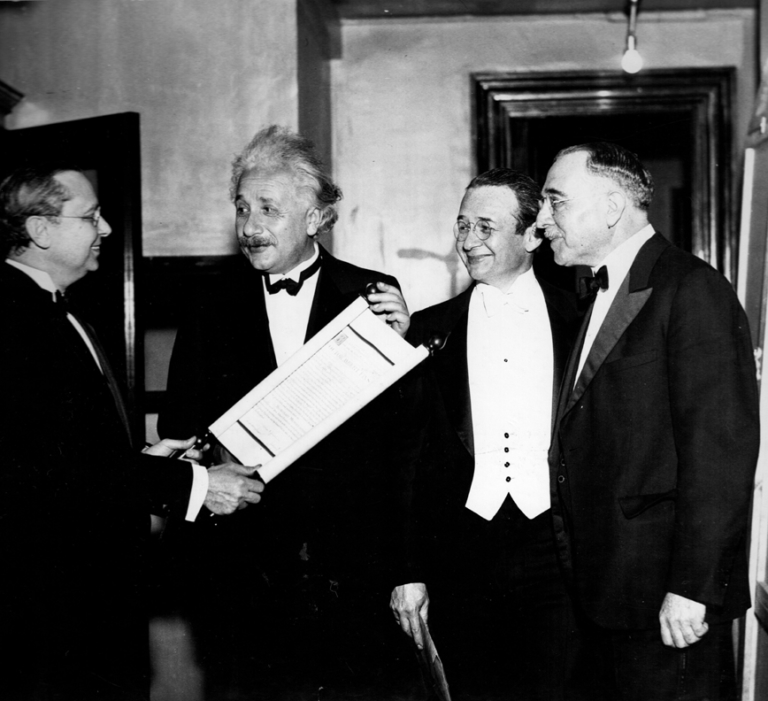
Stop 8: Temple Sinai[su_expand height = “50”]Founded in 1870 by former members of Shaarei Chesed, Temple Sinai is the oldest Reform synagogue in New Orleans. In 1949, Rabbi Julian Feibelman of New Orleans invited Dr. Ralph Bunche, a Harvard professor and the United Nations’ Acting Mediator in Palestine, to speak at Temple Sinai in New Orleans. No other auditorium in the city would allow an integrated audience until Rabbi Feibelman stepped forward to offer Temple Sinai. As a result, Dr. Bunche’s talk at Temple Sinai was an integrated speech at a time of strict segregation in the city, and allegedly the largest such crowd up to that point in the city’s history. Dr. Bunche was also the first Black recipient of the Nobel Peace Prize, which he was awarded for his mediation of a cease-fire between Jewish and Arab combatants following the 1948 formation of the state of Israel out of what had been Palestine.
[/su_expand]
Stop 9: Butterfly Riverview Park (the Fly) [su_expand height = “50”]As part of the celebration of the Jewish New Year, Jews traditionally gather to throw small bits of bread into moving streams, symbolically casting off regrets and transgressions from the past year in a ceremony known as Tashlich. We invite you to reflect on this ride and this past year; on the work finished, undone, and yet to take up for true and equal justice; and on your own place in that work. For inspiration, here is the opening of Emily Bass’ “Taslich for a Just City”:
It is our city, built of our silences and strengths, that is in the balance, here today.
In the shadows of shortening days, on the bright edge of the New Year,
We come bearing the heft, the inevitable weight of a full year’s
Decisions and inactions, movements and hesitations.
We come to fill our hands with what we have not done
And what we have. To empty them, to free them for work.
To empty them until there is nothing left but the space of a doorway that we can step into, together
With a New Year’s commitment to the balance of our city.
[/su_expand]
[/su_spoiler]
While you are riding, bring masks and hand sanitizer, respect physical distancing, and make sure that you have an emergency contact who knows where you are and can pick you up if needed. We also have some more in-depth tips for safe biking in the pandemic, check them out! Please be aware that NOLA to Angola cannot provide logistical or emergency support to individual riders this year. Take care, and safe riding!